Quick Guide Summary
In this highly specialized guide to Auricular Prosthetics, we explore:
1. What is an Auricular Prosthesis?
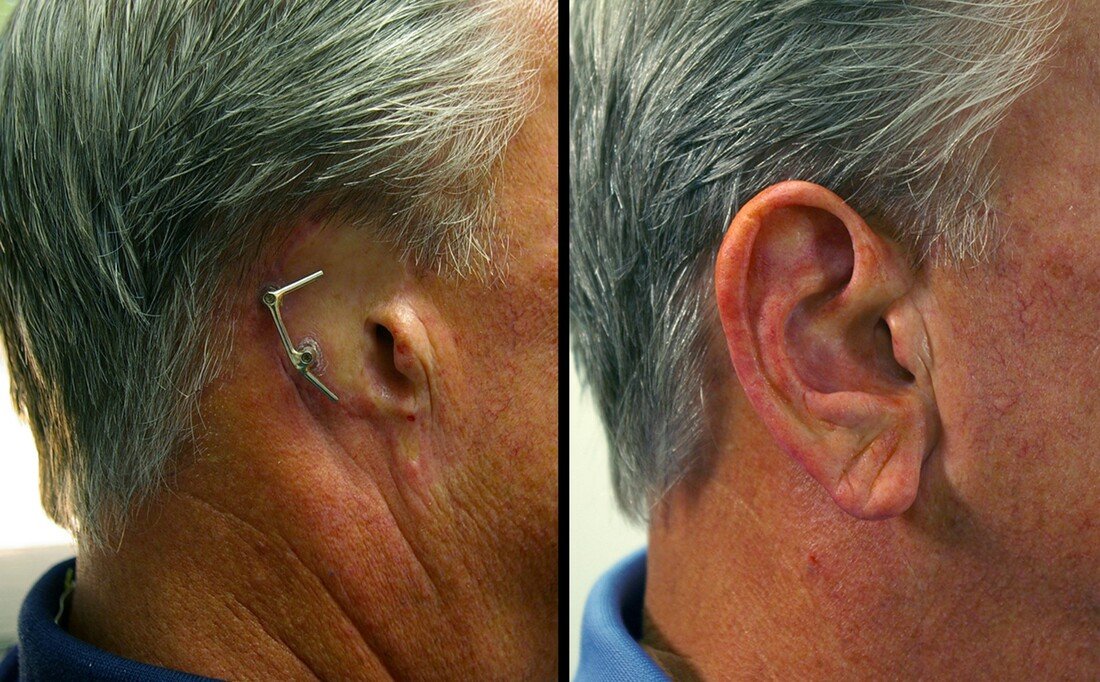
An Auricular Prosthesis is a highly customized, artificial replacement for the outer ear (the pinna). It falls under the extremely specialized dental sub-field of Maxillofacial Prosthodontics.
While plastic surgeons can sometimes surgically reconstruct an ear using rib cartilage, the results can be unpredictable, painful, and often lack the intricate, delicate folds of a natural ear. A maxillofacial prosthodontist, however, acts as both a clinician and a sculptor. We utilize medical-grade, biocompatible silicone to craft an artificial ear that exactly mirrors the patient's existing healthy ear, restoring not just facial symmetry, but profound psychological confidence.
2. Clinical Indications (Who Needs It?)
The loss or absence of an ear can severely impact a patient's identity and their ability to wear glasses or hearing aids. Prosthetic intervention is indicated in three primary scenarios:
Congenital Defects
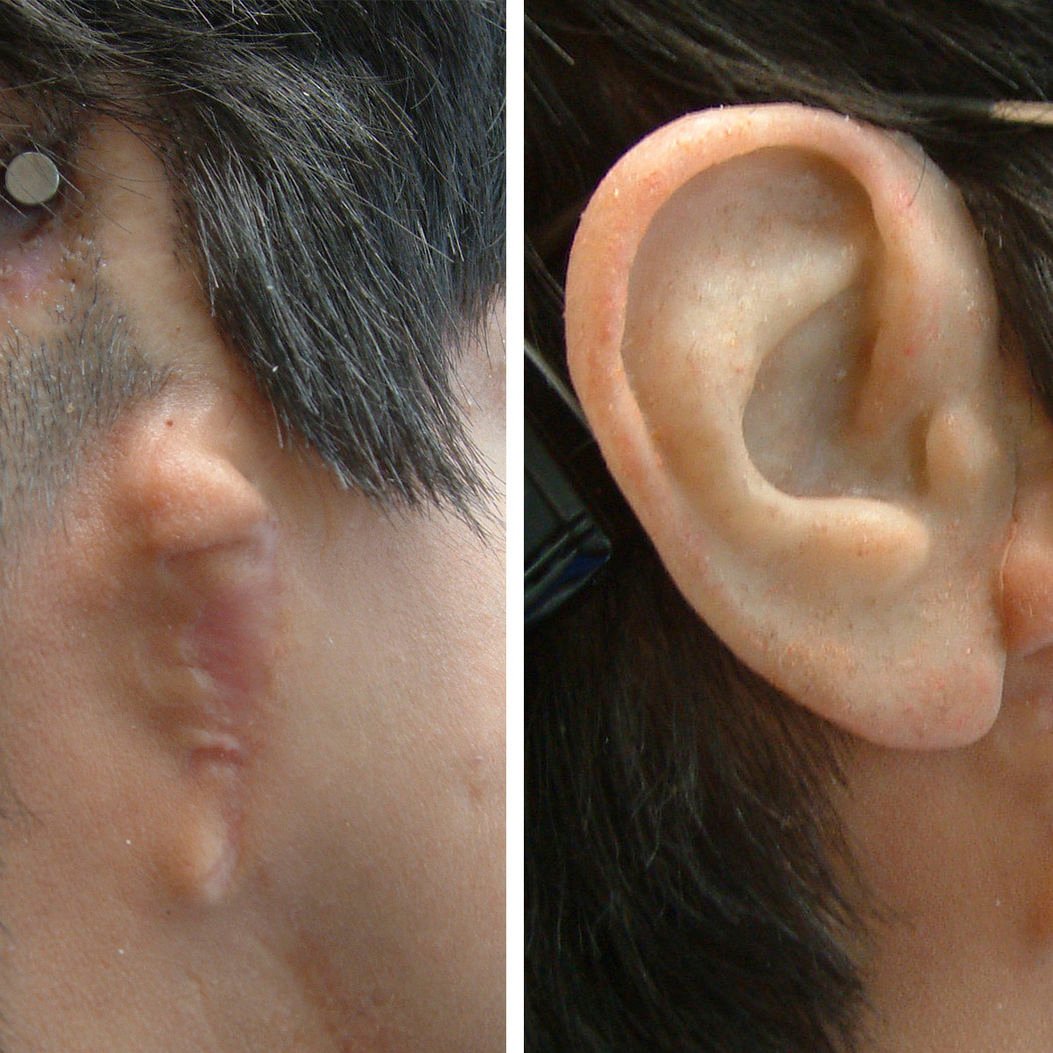
Conditions like Microtia (underdeveloped ear) or Anotia (complete absence of the ear) present from birth. A prosthesis provides a highly aesthetic solution without subjecting children to multiple traumatic rib-graft surgeries.
Traumatic Amputation
The ear is highly exposed and vulnerable. Severe burns, animal bites, road traffic accidents, or sports injuries can result in the complete or partial traumatic amputation of the outer ear.
Oncology (Cancer Resection)
Malignant tumors (such as squamous cell carcinoma or melanoma) on the ear often require aggressive surgical removal. A prosthesis safely conceals the surgical defect, allowing the oncologist to easily monitor the skin beneath for cancer recurrence—something impossible with surgical reconstruction.
3. Retention Methods (How Does It Stay On?)
An artificial ear must remain securely attached during daily activities. Maxillofacial prosthodontists utilize two primary methods of retention:
Adhesive-Retained Prosthesis
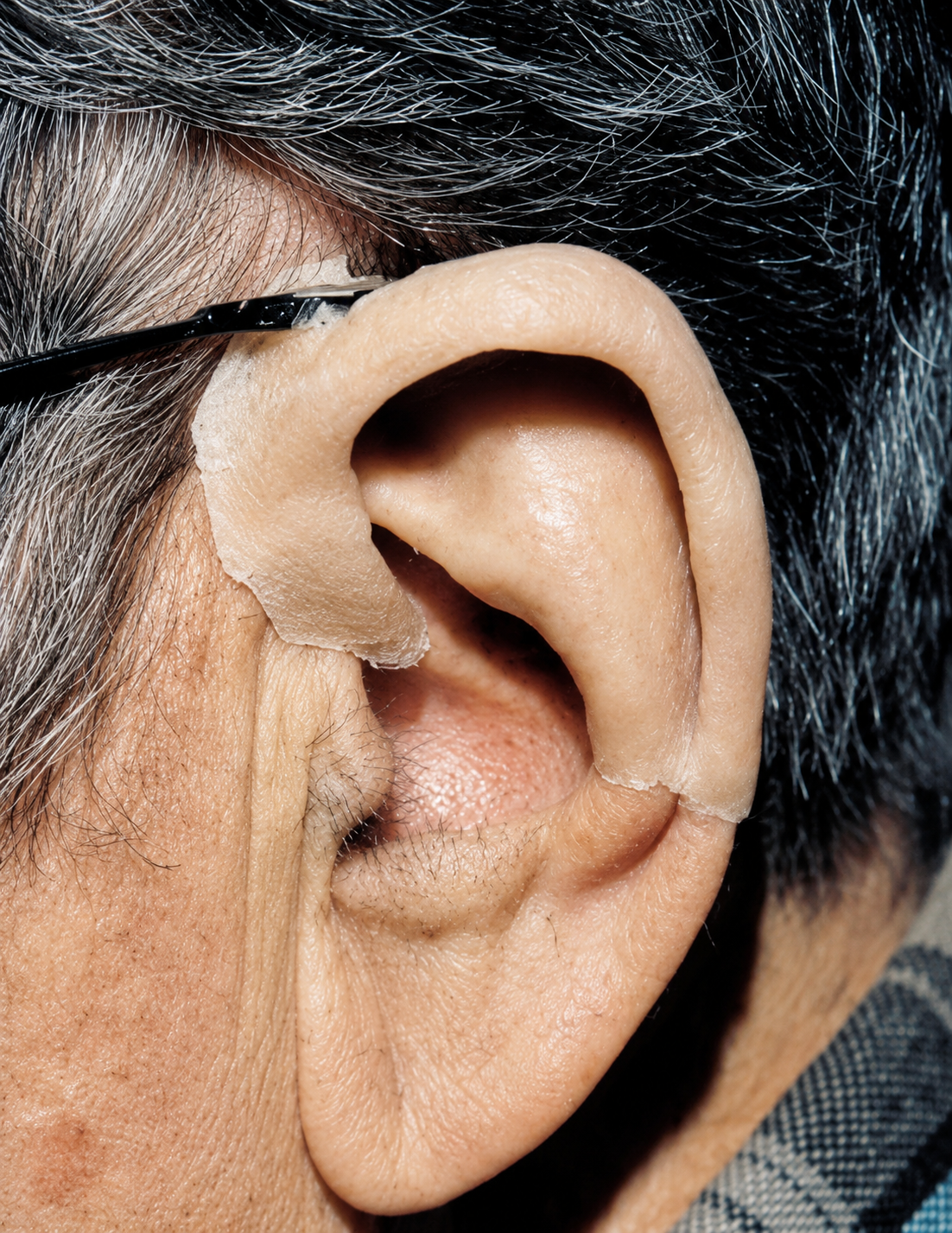
This is the non-surgical approach. The patient applies a highly specialized, skin-safe medical glue (mastic) or double-sided medical tape to the back of the silicone ear before pressing it onto the skin.
Pros & Cons: It requires no surgery and is cost-effective. However, the adhesive must be cleaned off daily, and heavy sweating or oily skin can compromise the bond during the day.
Implant-Retained Prosthesis
The gold standard for security. Similar to dental implants, a surgeon places two or three tiny titanium fixtures directly into the temporal bone of the skull. Once healed, magnetic caps or gold bar-and-clip attachments are secured to the implants. The silicone ear simply "snaps" onto these magnets.
Pros & Cons: Provides absolute rock-solid stability, perfect positioning every time, and eliminates the mess of glues. It does require minor surgery and daily cleaning around the implant abutments.
4. The Artistic & Clinical Workflow
Creating an auricular prosthesis is a blend of exact medical science and high-level sculpture. The process requires several meticulous appointments.
Impression & Mirroring
We take a physical mold of the defect area, as well as a mold of the healthy, opposite ear. This healthy ear mold serves as the anatomical template. In advanced cases, 3D facial scanning and CAD/CAM mirroring software are utilized.
Wax Sculpting & Try-In
A prototype ear is hand-sculpted in dental wax. The patient tries on this wax ear in the clinic. The prosthodontist meticulously checks the projection, anatomical folds, and alignment relative to the eyes and nose to ensure perfect facial symmetry.
Intrinsic Color Matching
Perhaps the most critical step. The specialist mixes specific pigments into the raw, uncured silicone to perfectly match the base skin tone of the patient, accounting for different shades in the helix, lobule, and shadows of the ear.
Final Processing & Extrinsic Tinting
The wax is boiled out, and the tinted silicone is processed and cured in a mold. Once delivered, final external tinting is applied to mimic subtle, lifelike details such as freckles, sun damage, and microscopic capillary veins.
Care, Maintenance, and Lifespan
A silicone ear requires gentle, daily maintenance. The prosthesis must be removed every night before sleeping to allow the underlying skin to breathe and to prevent the delicate, feather-thin edges of the silicone from tearing against the pillow.
- • Cleaning: Wash the prosthesis daily with a mild, unscented soap and water. Never use harsh chemicals or alcohol, which will degrade the silicone.
- • Adhesive Removal: If using glues, all adhesive residue must be gently rolled off the back of the ear daily to prevent buildup.
- • The Lifespan: Silicone is porous. Over time, UV sunlight and environmental factors will cause the painted colors to fade, and the edges may fray. A typical auricular prosthesis needs to be entirely remade every 1 to 3 years. We retain your original molds to make future replacements easier.
5. Maxillofacial Expertise in Varanasi
Fabricating an undetectable facial prosthesis is an art form mastered by very few dental professionals. Located strategically on BHU Trauma Centre Road in Lanka, Varanasi (easily accessible from Samneghat, Assi Ghat, and Ravidas Gate), Ayaansh Dental Clinic offers this highly specialized, life-changing service.
The clinic is directed by Dr. N Srivastava, a highly qualified MDS Prosthodontist. Her advanced clinical training at Banaras Hindu University (BHU) equipped her with the exact surgical, anatomical, and artistic skills required to rehabilitate patients suffering from severe facial defects.
6. Frequently Asked Questions
Yes. A skilled maxillofacial prosthodontist custom-sculpts the ear to exactly mirror your healthy ear. The medical-grade silicone is intrinsically tinted and extrinsically painted to perfectly match your unique skin tone, complete with subtle details like freckles, veins, and capillary structures.
No. You must remove the prosthesis every night. Sleeping with it on will trap moisture against your skin (leading to fungal infections) and the friction against your pillow will rapidly tear the ultra-thin, delicate edges of the silicone.
Yes. One of the main functional benefits of an auricular prosthesis is that it restores the anatomical groove required to support the arm of a pair of eyeglasses or a behind-the-ear hearing aid. Implant-retained prostheses provide the best stability for this.
If you opt for an implant-retained prosthesis, the surgical placement of the titanium posts into the skull bone is done under profound local anesthesia or sedation. It is generally a minor, painless procedure, and post-operative discomfort is easily managed with routine pain relievers.

Dr. N Srivastava
AuthorBDS, MDS (BHU) • Prosthodontist & Implantologist
An expert trained at the prestigious Banaras Hindu University (BHU), Dr. N Srivastava specializes in complex dental implant surgery, full mouth reconstructive prosthodontics, and highly specialized maxillofacial rehabilitation. She utilizes advanced diagnostics and artistic precision to restore facial aesthetics for trauma and oncology patients in Varanasi.