Quick Guide Summary
In this comprehensive medical guide to dental implants, we explore:
1. What Are Dental Implants?
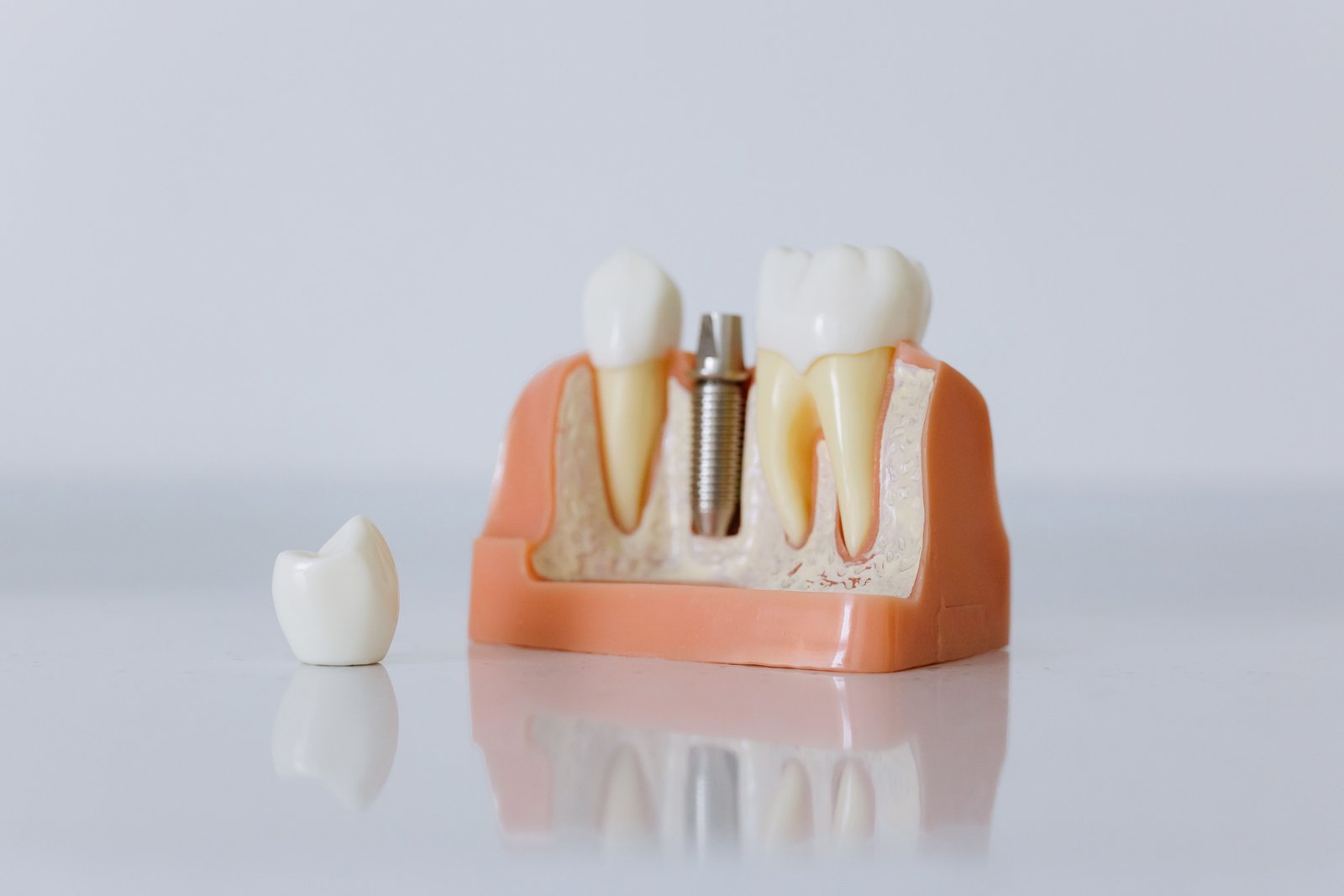
Historically, replacing a missing tooth meant relying on removable dentures or grinding down healthy adjacent teeth to support a fixed bridge. Today, Dental Implants represent the absolute pinnacle of restorative dentistry because they are the only treatment designed to replace both the visible crown of the tooth and the invisible root beneath the gums.
A complete dental implant system is generally comprised of three distinct parts:
-
The Implant Post A small, highly engineered screw-like post made of biocompatible medical-grade Titanium. It is surgically placed directly into the jawbone to act as the new, permanent artificial root.
-
The Abutment A connector piece that is securely attached to the top of the titanium implant post after it has healed. It protrudes slightly above the gumline to provide a solid foundation for the final tooth.
-
The Prosthesis (Crown) The final, visible ceramic tooth (usually Zirconia or E.max) that is securely screwed or cemented onto the abutment, perfectly matching your natural teeth in shape, size, and color.
2. Why Implants Are the Gold Standard
If you have missing teeth, you might wonder why an implant is clinically recommended over a traditional bridge. The answer lies in the physiological response of your jawbone and the preservation of your remaining teeth.
Preserves Jawbone Density
When a tooth is lost, the underlying bone stops receiving chewing stimulation. The body responds by rapidly resorbing (melting away) that bone. Implants are the only solution that stimulates the bone like a natural root, halting bone loss and preventing the face from prematurely aging.
Protects Adjacent Teeth
A traditional bridge requires grinding down the healthy teeth on either side of the gap to act as anchors. Implants are standalone structures. They replace the missing tooth without sacrificing the structural integrity of your neighboring healthy teeth.
The Magic of Osseointegration
Titanium possesses a unique biological property. Once surgically placed, living bone cells will grow directly into the microscopic pores of the titanium surface over a period of 3 to 6 months. This fusion process, known clinically as Osseointegration, locks the implant into the jawbone so firmly that it literally becomes a permanent part of your anatomy.
3. Types of Implant Systems
Implants are highly versatile and can be engineered to replace a single tooth, a section of teeth, or an entire dental arch.
Single Tooth Implant
One titanium post and one ceramic crown. This is the ideal, non-destructive method for replacing a tooth lost to trauma or severe decay without altering adjacent teeth.
Implant-Supported Bridge
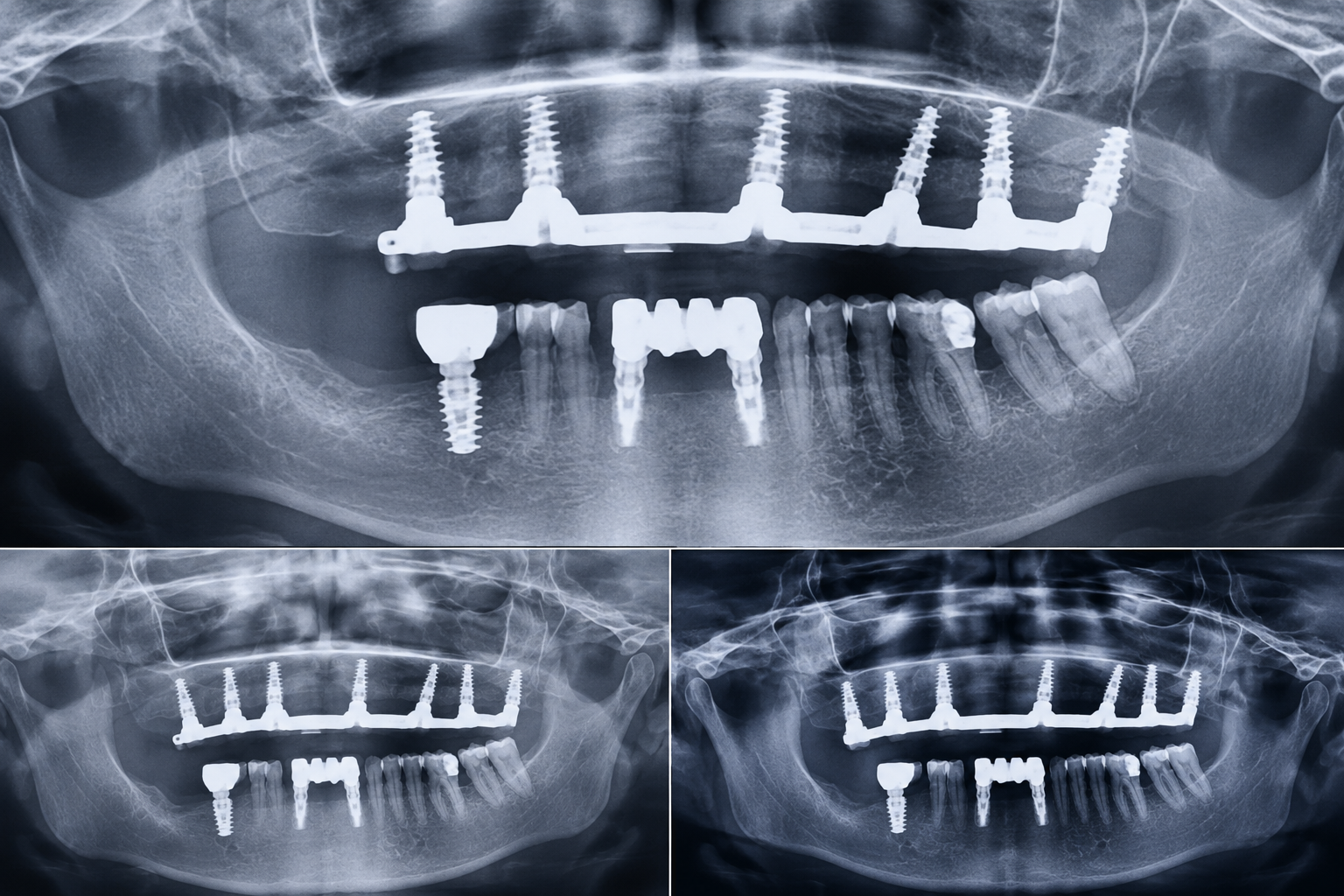
If you are missing three or four teeth in a row, we do not need to place an implant for every single missing tooth. Two implants can be placed at either end of the gap to support a highly stable, multi-unit ceramic bridge.
All-on-4® / All-on-6® (Full Arch)
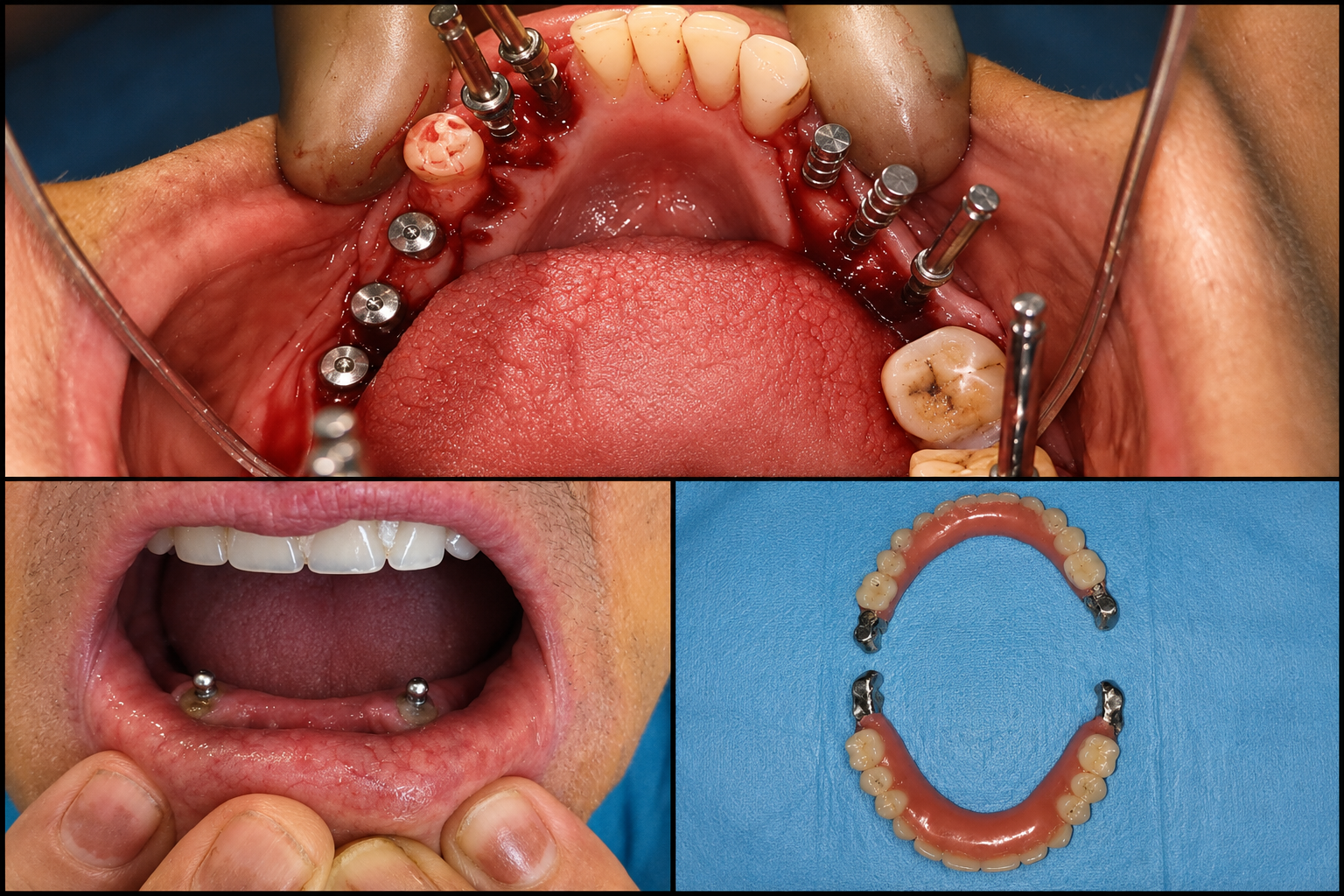
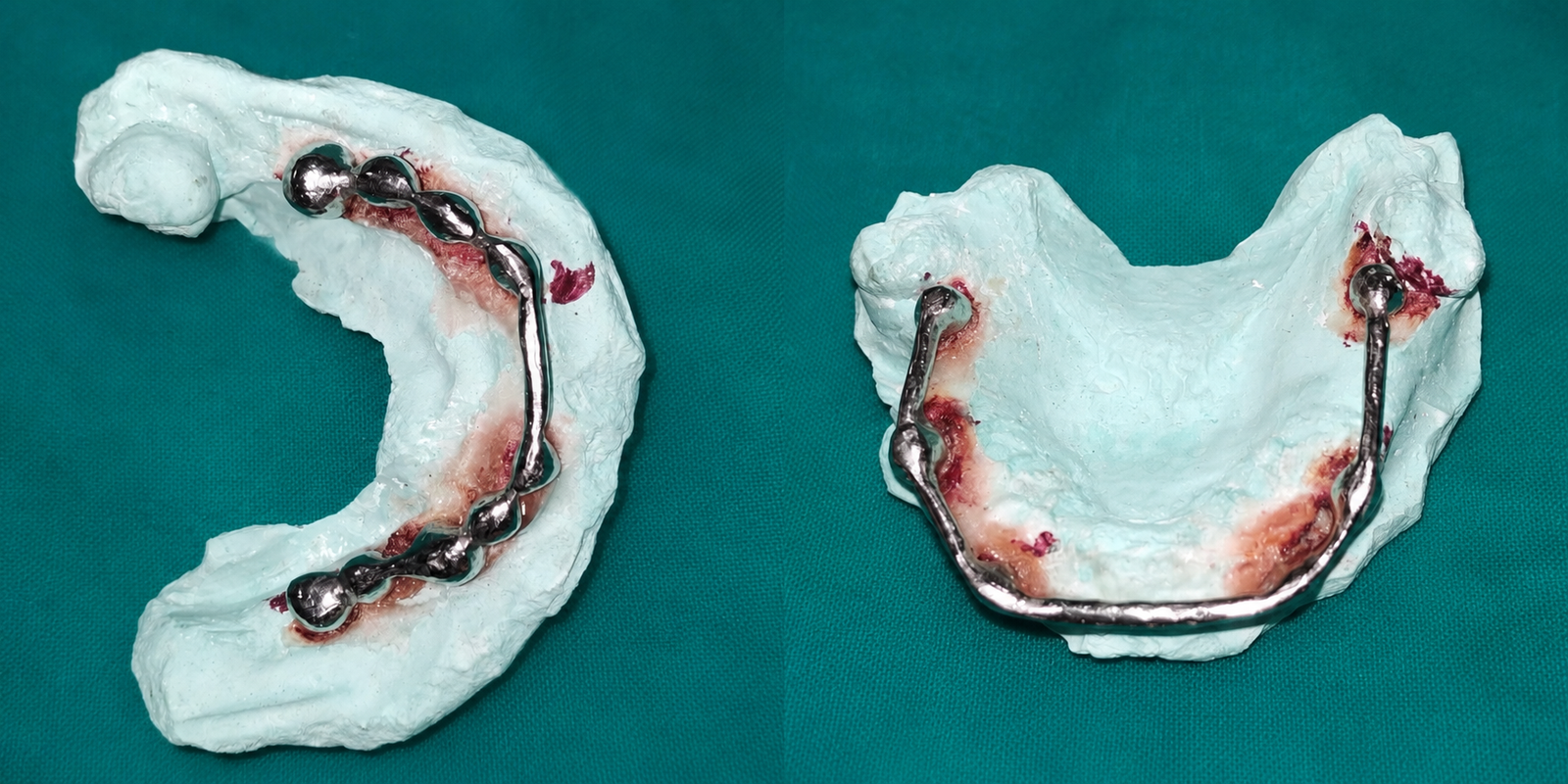
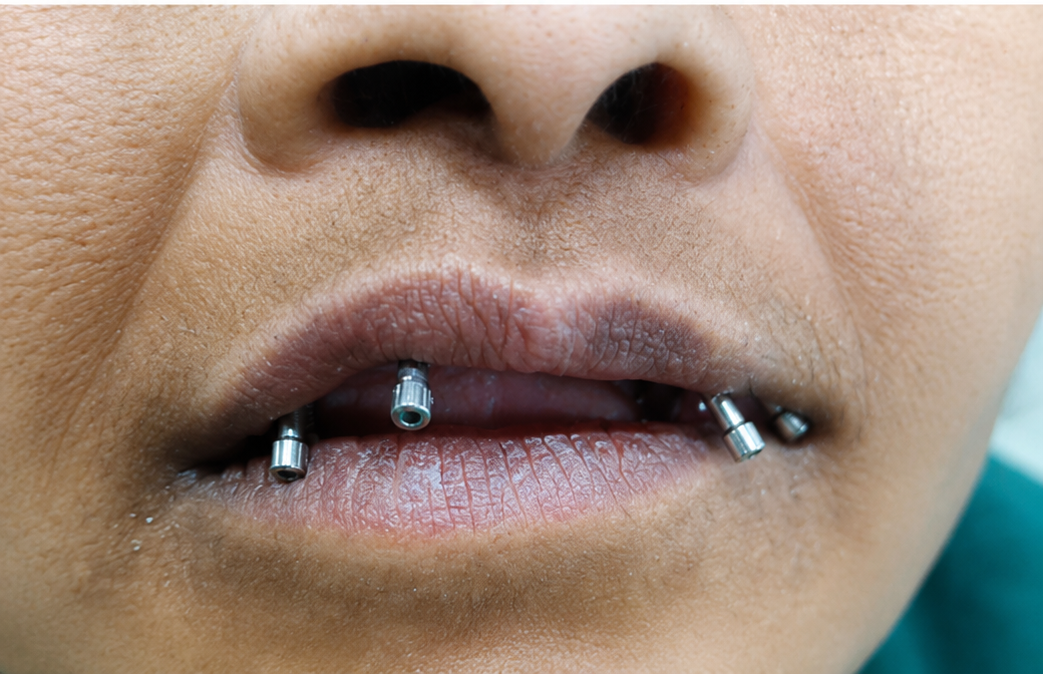
For patients who have lost all their teeth or wear loose, uncomfortable dentures. Just four or six strategically angled implants are placed in the jaw to permanently anchor a complete, full-arch set of teeth. They do not come out at night and function exactly like a natural set of teeth.
4. The Surgical Procedure & Timeline
Implant dentistry requires patience. Because we are waiting for biological bone fusion to occur, the process is systematically divided into distinct phases over several months.
Phase 1: 3D Diagnostics & Planning
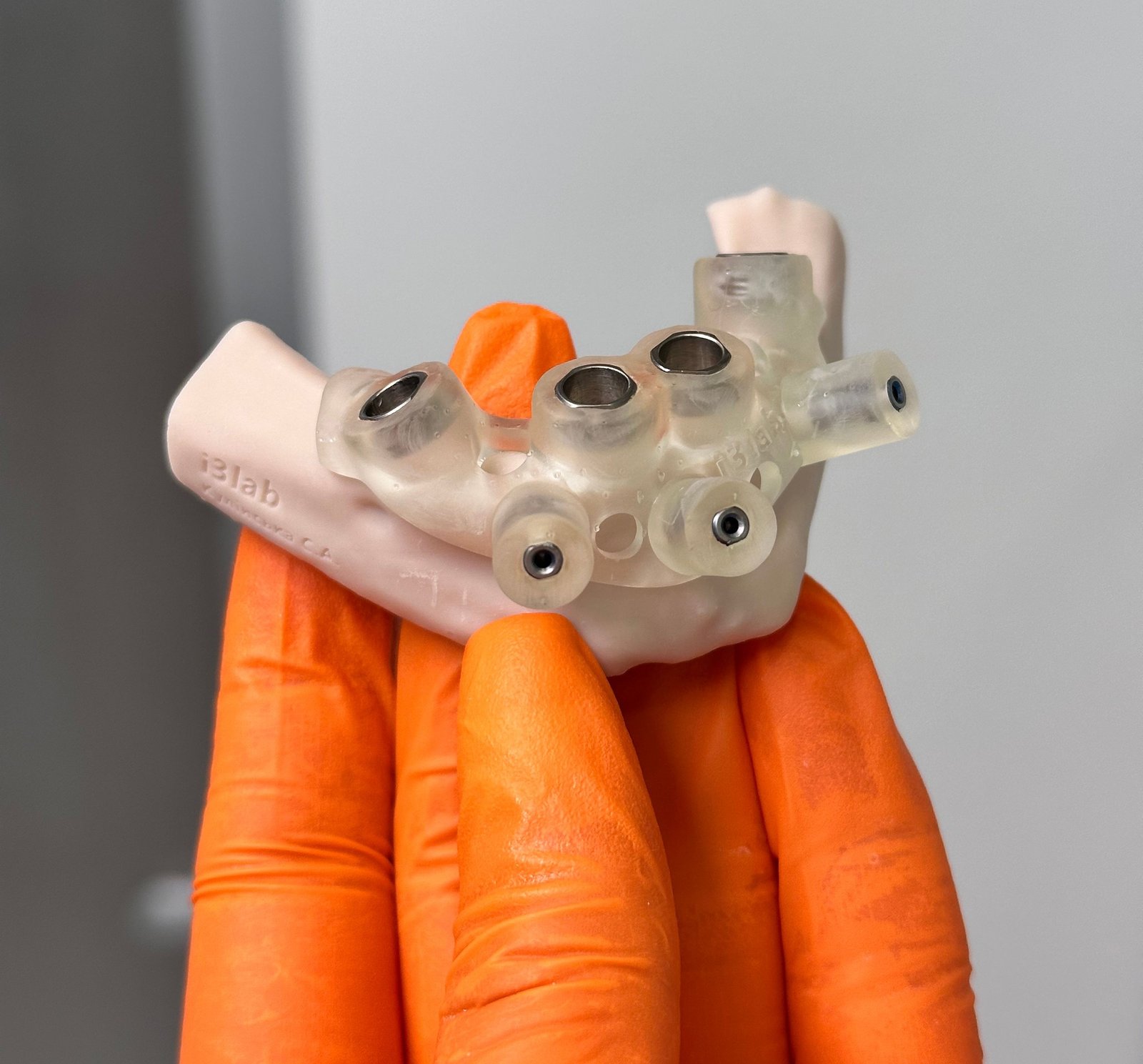
We utilize advanced 3D CBCT (Cone Beam) scans to evaluate the exact volume, density, and height of your jawbone, ensuring safe clearance from nerves and sinus cavities. We digitally plan the exact angle and depth of the implant placement before surgery begins.
Phase 2: Surgical Placement
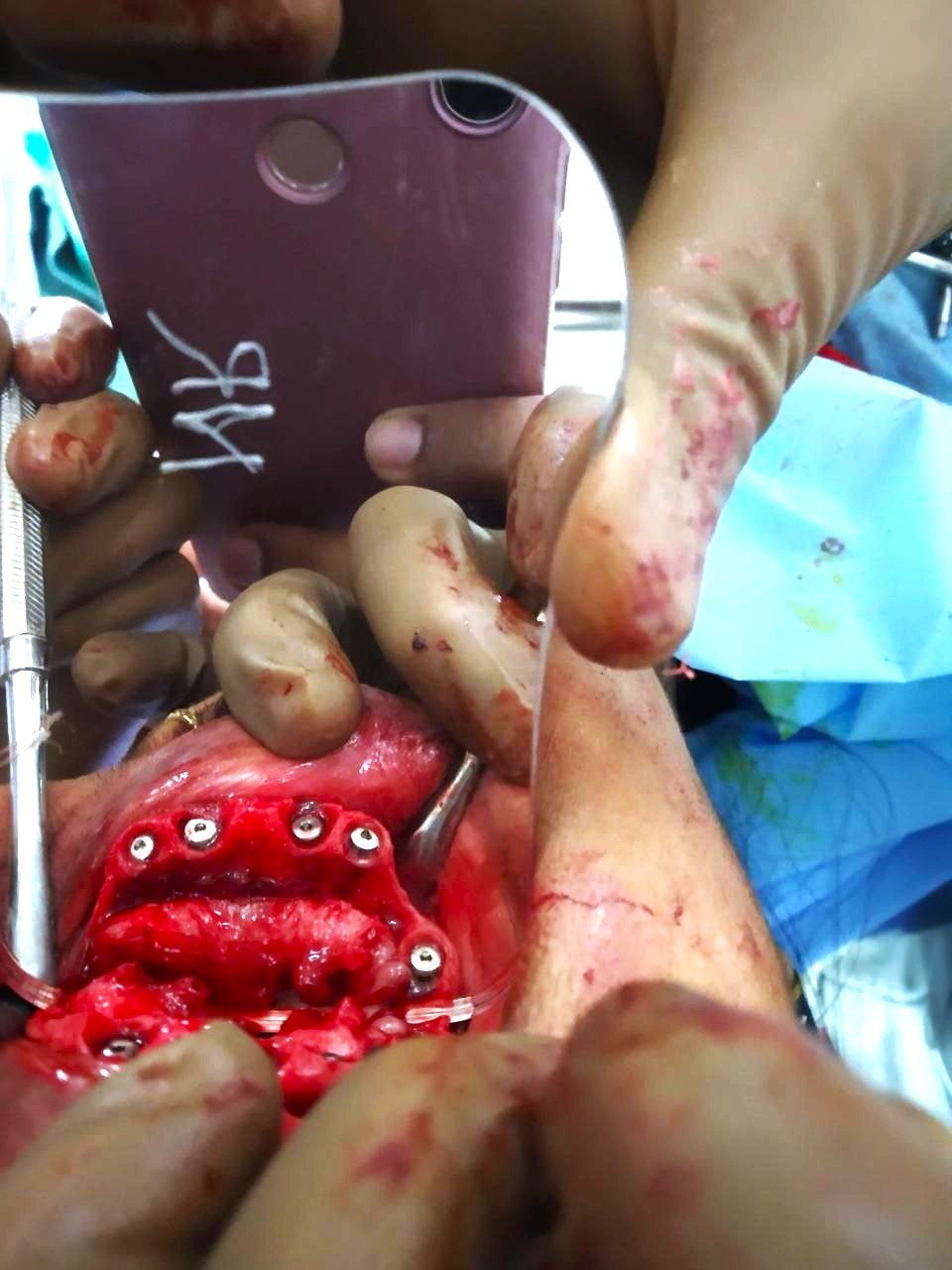
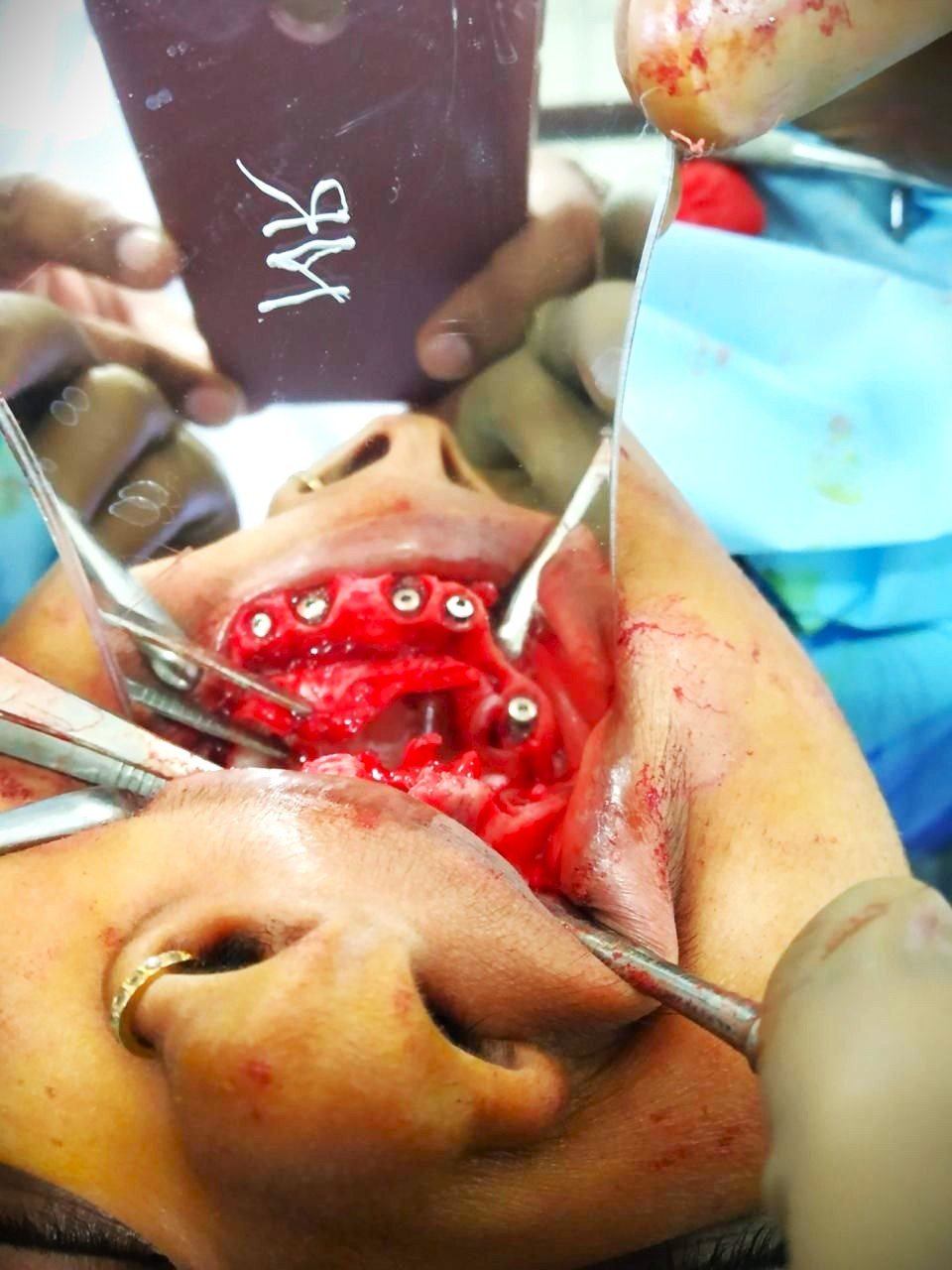
Under profound local anesthesia, the gum is gently reflected, and a precise channel is created in the jawbone. The titanium implant is threaded into place. The gums are sutured closed. This procedure is generally very quick and completely painless.
Phase 3: The Healing Period (Osseointegration)
Over the next 3 to 6 months, the jawbone naturally heals and fuses with the implant surface. You will wear a temporary restoration or flipper during this time so you are never without a tooth.
Phase 4: Abutment & Final Crown
Once fully integrated, the abutment is attached. An ultra-precise digital impression is taken to fabricate your final custom Zirconia or E.max crown. The crown is securely fastened, completing your brand-new tooth.
What if I don't have enough bone?
If a tooth has been missing for many years, the jawbone may be too thin to safely hold an implant. In these cases, Dr. Srivastava will perform a Bone Grafting or Sinus Lift procedure prior to implant placement.
This involves placing sterilized bone graft material into the deficient area to rebuild the foundation. Once the new bone solidifies (typically 4 to 6 months later), the implant can be placed safely with a highly predictable long-term success rate.
5. Cost of Dental Implants in Varanasi
Dental implants are a long-term investment in your health and quality of life. The exact cost depends on the brand of the titanium implant (domestic vs. international premium brands), the need for bone grafting, and the material of the final crown.
| Treatment Component | Est. Cost Range (INR) | Details |
|---|---|---|
| Standard Titanium Implant Placement | ₹20,000 - ₹35,000 | FDA/CE approved standard systems. Surgical phase only. |
| Premium Implant Systems (e.g., Nobel, Straumann) | ₹40,000 - ₹55,000+ | Elite global brands with highly modified active surfaces for faster healing. |
| Bone Grafting (If Required) | ₹8,000 - ₹15,000 | Varies strictly based on the volume of graft material needed. |
| Final Zirconia Crown over Implant | ₹8,000 - ₹15,000 | Placed 3 to 6 months after the initial surgery. |
Note: This table represents the surgical and prosthetic phases separately. A full comprehensive consultation and CBCT scan are required to provide a definitive customized quotation.
6. Local Expertise: Why Ayaansh Clinic?
Implant surgery is highly technique-sensitive. Locating the exact optimal bone density while avoiding vital nerves requires an expert. Located centrally on BHU Trauma Centre Road in Lanka, Varanasi (easily accessible from Assi Ghat and Ravidas Gate), Ayaansh Dental Clinic offers premium implantology services.
The clinic is directed by Dr. N Srivastava, an MDS Prosthodontist and Implantologist. Her postgraduate training at BHU focused extensively on surgical implant placement and full-mouth functional reconstruction, ensuring that your surgery is executed flawlessly and your final teeth function exactly like natural ones.
7. Frequently Asked Questions
No. The procedure is performed under profound local anesthesia. You will feel pressure, but zero pain. Most patients report that having an implant placed is actually much less uncomfortable than having a tooth extracted. Post-operative soreness is easily managed with routine pain relievers.
The titanium implant post integrated into your jawbone is designed to last a lifetime. The ceramic crown placed on top may need replacement after 10 to 15 years due to normal chewing wear and tear.
There is no upper age limit for dental implants. As long as you are in reasonably good systemic health (e.g., controlled diabetes or blood pressure) and have adequate bone density, you are a candidate. Improved chewing function dramatically enhances quality of life at any age.
Titanium is completely biocompatible and inert, meaning true "allergic rejection" is incredibly rare. Implant failure (which occurs in less than 2-3% of cases) is usually due to poor oral hygiene, smoking, or uncontrolled diabetes hindering the bone healing process.
You will never be without a tooth. While we wait for the implant to fuse with the bone (3-6 months), we will provide you with a temporary cosmetic flipper or a temporary crown so your smile remains intact during the healing phase.
Dr. N Srivastava
AuthorBDS, MDS (BHU) • Prosthodontist & Implantologist
An expert trained at the prestigious Banaras Hindu University (BHU), Dr. N Srivastava specializes in dental implants, crown and bridge treatments, full mouth reconstructions, and cosmetic dentistry. She focuses on using advanced diagnostics and patient-first methodologies to deliver painless, premium care in Varanasi.
Read More
Related Clinical Insights
Debunking the Myth: Painless Root Canal
Discover how modern rotary endodontics have made RCT as comfortable as a standard filling.
Read Article →When Do You Need a Dental Crown?
Understanding the role of crowns in protecting weak teeth and completing root canal treatments.
Read Article →Complete & Removable Dentures Guide
Everything you need to know about adjusting to new dentures and implant-supported overdentures.
Read Article →What is Full Mouth Rehabilitation?
A deep dive into complex restorative cases. How we rebuild entire smiles functioning perfectly and looking naturally beautiful.
Read Article →Ready to Transform Your Smile?
Premium Dental Care by BHU Alumni in Varanasi.